


Top stories - Google News Google News
- India's rupee forecast to weaken toward 100-per-dollar level even as RBI pushes back - CNBC
 on October 16, 2026 at 12:54 am
India's rupee forecast to weaken toward 100-per-dollar level even as RBI pushes back CNBCIndian rupee extends winning streak as dollar, oil ease and stocks rally Business RecorderIndia's RBI has spent half of $140 billion FX capital haul in rupee defence, bankers estimate ReutersIndia May Need Rate Hikes, Tax Cuts to Buoy Rupee, Analysts Say Bloomberg TaxLenders Flag Freeze in Rupee Forwards, Market Distortions to RBI Bloomberg.com
- 1QFY27 textile exports grow 5.26pc YoY - Business Recorderon October 16, 2026 at 12:31 am
1QFY27 textile exports grow 5.26pc YoY Business RecorderReality of Chinese imports DawnPM urged to reject yarn exclusion from EFS The Express TribuneTMA for reforms to restore export competitiveness Business RecorderPTC warns restrictions on yarn and fabric imports could rais Profit by Pakistan Today
- Pakistan, Iran FMs to meet in Baghdad - The Express Tribuneon October 16, 2026 at 12:04 am
Pakistan, Iran FMs to meet in Baghdad The Express TribunePakistan, Iran to renew peace consultations in Baghdad moot Pakistan TodayAfghanistan and Sudan crises to be discussed at OIC foreign ministers’ meeting خبرگزاری اطلسForeign Ministry: 53 countries have confirmed their participation in the OIC Baghdad session » Iraqi News Agency وكالة الانباء العراقية (واع)OIC to Discuss Crises in Afghanistan and Sudan at Baghdad Meeting 8AM Media
- Prince Harry and Meghan make first joint appearances since returning to UK - PBSon October 15, 2026 at 11:57 pm
Prince Harry and Meghan make first joint appearances since returning to UK PBSHarry leaves Nottingham with thumbs-up as he and Meghan round out first joint visit since UK return BBCMeghan’s pseudo-royal visits will be few and far between The TelegraphPrince Harry and wife Meghan make first joint appearance since UK return Reuters'Frustration' inside Buckingham Palace over Meghan Markle, Harry's first joint appearance in UK The News International
- Houthi missile attack on Yemeni presidential palace kills five, minister says - BBCon October 15, 2026 at 11:38 pm
Houthi missile attack on Yemeni presidential palace kills five, minister says BBCIran-aligned Houthis launch deadly attack on Yemeni presidential palace in escalating campaign against Saudi Arabia CNNYemen's Houthis hit palace in Aden, coalition details attacks on Saudi infrastructure ReutersHouthi missiles strike Saudi-led forces HQ at presidential palace in Aden The GuardianIran war updates: Five killed, 16 hurt in Houthi attack on palace in Aden Al Jazeera
Al Jazeera – Breaking News, World News and Video from Al Jazeera Breaking News, World News and Video from Al Jazeera
- Argentine students protest on campus over Milei’s austerityon October 16, 2026 at 2:11 am
Judge fines the government for failing to fund universities as protests over Milei's cuts turn violent.
- Peshawar mourns children killed in school roof collapseon October 16, 2026 at 2:01 am
Thousands gather for funeral prayers in Pakistan’s Peshawar after a school rooftop collapse killed at least 34 children.
- Progressives, AIPAC and the future of the Democratic Partyon October 16, 2026 at 2:01 am
Mehdi Hasan goes Head to Head with ex-Biden official Neera Tanden on the Democratic Party’s chances in the US midterms.
- Myanmar’s coup leader-turned-president wins back neighbours despite waron October 16, 2026 at 1:34 am
ASEAN leaders are embracing Min Aung Hlaing, but critics warn it emboldens a military still bombing civilians.
- Clashes erupt at protest over university funding law in Argentinaon October 16, 2026 at 1:19 am
Protesters in Buenos Aires demanded the government implement a law to boost university funding.
BBC News BBC News - World
- Three children and teacher killed by 16-year-old at Oregon primary school
 on October 16, 2026 at 2:32 am
The suspect was shot dead by a local community member who followed him into the school, said police.
- 'It's really hard to believe' - How Oregon primary school shooting unfolded
 on October 16, 2026 at 1:36 am
Three children aged 5, 8 and 11 and a teacher were killed after a 16-year-old suspect opened fire in the city of Bend, local police say.
- Houthi missile attack on Yemeni presidential palace kills five, minister says
 on October 15, 2026 at 11:38 pm
Yemen's information minister says the prime minister and other ministers were unhurt when ballistic missiles hit al-Maashiq Palace.
- Tip-off foiled US teen suspect's plot to attack Hindu temple, police say
 on October 15, 2026 at 11:27 pm
The alleged plot only failed because the 19-year-old suspect's gun jammed outside the place of worship, say police.
- Are student protests being manipulated ahead of France's presidential election?
 on October 15, 2026 at 11:25 pm
France's prime minister has suggested that student anger is being weaponised, as the unions and other protesters prepare to take to the streets too.
Dawn - Home Dawn
- Two killed as rain, snow disrupt life across Gilgit-Baltistan
 by none@none.com (Jamil Nagri) on October 16, 2026 at 2:39 am
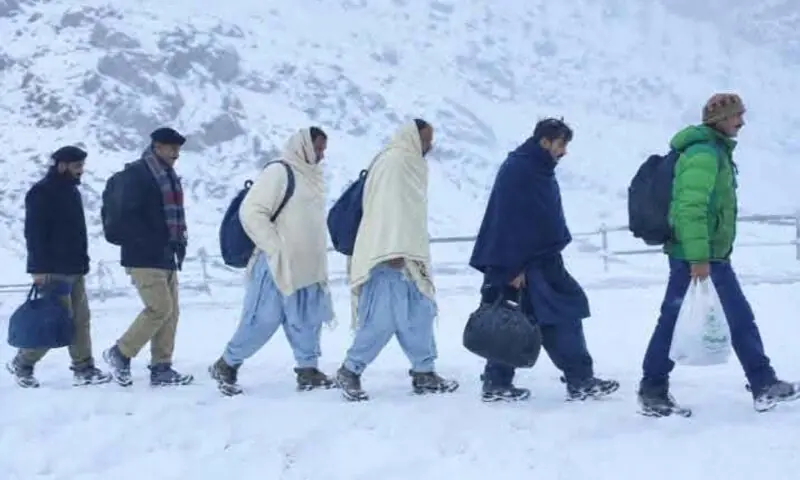
• Babusar Pass road closed to all traffic; Diamer police rescue tourists stranded after heavy snowfall • Karakoram Highway remains open despite blockages along route GILGIT: Two young men were killed on Thursday when a landslide struck their vehicle on the Karakoram Highway, as intermittent rain and snowfall disrupted routine life across Gilgit-Baltistan (GB) and blocked the Babusar Pass road and other links to remote areas. Local police said Arif Hussain and Kashif Ali, residents of Gulmat in the Nagar district, were travelling on Karakoram Highway when a rock struck their vehicle in a landslide-prone area near the Pissan section, early on Thursday. Both men were seriously injured and later succumbed to their injuries. They were shifted to a nearby government hospital, where doctors pronounced them dead. According to the local administration, rain caused landslides at multiple locations in the Nagar section on Wednesday and Thursday. “Heavy rain is currently continuing in the Nagar district, leading to landslides at various locations along the Karakoram Highway. However, the highway remains open to traffic,” a GB police spokesperson said. “The public is advised to contact the Police Helpline at 15 to check the latest status of the highway before travelling.” Meanwhile, authorities said upper areas of GB received intermittent snowfall, while lower areas received rain. “The Babusar Pass road has been temporarily closed to all traffic due to heavy snowfall at Babusar Top,” the police spokesperson said in a statement. “All travellers and tourists are advised to avoid unnecessary travel and to choose alternative routes.” A large number of tourists travelling through the Babusar Pass road toward GB were stranded near the Babusar Top area on Wednesday night. Diamer police personnel rescued the travellers stranded in the snow and brought them safely to Babusar Top, the police spokesperson said. Tourist Police said heavy snowfall received at Khunjerab Top made the Karakoram Highway potentially dangerous. Traffic between Pakistan and China through the Khunjerab Pass remained disrupted following slippery conditions. Snowfall also continued across the upper areas of the Astore, Skardu, Ghanche, Shigar, Kharmang, Hunza and Nagar districts, creating difficulties for local residents. Many link roads have been blocked. Published in Dawn, October 16th, 2026
- Council of Islamic Ideology worried by law and order situation, Mideast unrest
 by none@none.com (Kalbe Ali) on October 16, 2026 at 2:38 am
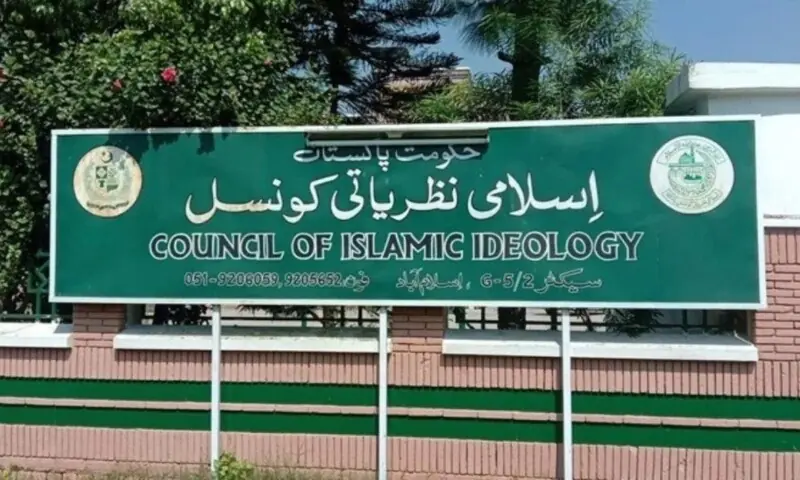
ISLAMABAD: The Council of Islamic Ideology (CII) met on Thursday and expressed concern over the deteriorating law and order situation in the country, as well as international conflicts involving Middle Eastern countries. In a meeting presided over by CII Chairman Dr Muhammad Raghib Hussain Naeemi, the members discussed terrorism in Pakistan and various legal and national issues, including licences for religious TV networks. During the meeting, the council expressed concern about shipping lines and maritime traffic due to the closure of the Strait of Hormuz following the US-Iran war. The CII members also mentioned the Houthis in a veiled criticism of their intervention in the Bab al-Mandeb Strait in the Red Sea. However, the majority decided not to name a brotherly Muslim country in the minutes of the meeting. It may be noted that Saudi Arabia and Yemen’s Houthis have been engaged in a fierce conflict for weeks, with the latter closing the crucial waterway. Council supports licences for ‘religious TV channels’; slams attacks on ships using Bab al-Mandeb According to a statement, the council expressed regret over the death of three Pakistanis as a result of attacks by Somali pirates on the high seas and offered prayers for the departed souls. The meeting also approved ringtone messages related to respect for flags and banners used during Muharram. The public service messages to be approved by the telecom regulator would be audible to callers during the month of Muharram, highlighting the sanctity of the month. Licences for channels The council said religious channels should also be issued licences like other channels, not just NOCs, and that laws and rules should be amended accordingly. Currently, there is no category of “religious channels” with the Pakistan Electronic Media Regulatory Authority (Pemra). However, a senior official of Pemra told Dawn that religious channels were not allowed as it could lead to an uneasy situation. Sect-specific channels could provoke sectarianism in the country, the official said, adding that if non-Muslim communities wanted to have their satellite channels under any such policy, this could invite resentment from Muslim clerics. In the wake of the Federal Shariat Court’s decision on the abolition of ‘chaddar and parchi’, the council declared that a special inheritance tribunal should be established to dispose of cases quickly related to women’s property and inheritance. In March 2025, the Federal Shariat Court (FSC) said that the cultural and tribal customs of ‘Chaddar’ and ‘Parchi’, which are used to pressure or force women into giving up their ancestral inheritance were un-Islamic and illegal. The council also appreciated the “Muslim Family Laws (Father’s Maintenance) Amendment Bill 2026” presented by Senator Samina Mumtaz Zehri. The meeting also considered the Shariah status of the application of Article 120 of the Limitations Act 1908 in the matter of recovery of maintenance of children and wives for the past period. The council declared that the rights do not expire even after the time limit for hearing has passed. The CII lauded the Supreme Court’s decision to uphold the death sentence of Qaiser Ayub in a blasphemy case, saying that this decision proved that incidents of blasphemy were a reality. The meeting was attended by Allama Tahir Ashrafi and Dr Intikhab Ahmed Noori, among others. Published in Dawn, October 16th, 2026
- Trump banking on ‘swift end’ of Iran war to bring down fuel prices
 by none@none.com (Monitoring Desk) on October 16, 2026 at 2:30 am
• Pezeshkian decries US blockade, insists ‘military force’ will not compel Tehran into submission• Washington weighs using ‘Mother Of All Bombs’ against Iranian energy sites, CNN reports WASHINGTON: US President Donald Trump once again predicted a swift end to the war with Iran, and a sharp drop in oil prices once the conflict concludes, even as Iranian President Masoud Pezeshkian warned that military action cannot force them into submission. “The Iran war will end very soon … Soon, as they want it to end,” Trump told reporters in Montana. “They’ll never have a nuclear weapon, and oil prices will drop like a rock.” According to Anadolu Agency, Trump also expressed uncertainty over which Iranian officials the US was negotiating with. “They don’t have a navy. They don’t have an air force. Their army is decimated. Their leaders are gone,” Trump said. “I should have probably left their leaders because I don’t know who the hell we’re negotiating with.” “Iran was the bully of the Middle East,” he said, adding that the country was no longer as powerful as it had been. Trump also claimed that US strikes had destroyed Iran’s naval fleet and rendered its military aircraft unusable. He said Iran had 159 ships and asserted that none remained operational, while also claiming that its fighter jets had been destroyed on the country’s runways. ‘Iran won’t submit to force’ Meanwhile in Tehran, President Pezeshkian warned that military action cannot force a country into submission, adding that his country “must find a way to strengthen national cohesion and unity”, Al Jazeera reported. He said that the country was facing its most intense blockade since the 1979 Revolution, accusing the United States of seeking to provoke public protests. “Over the 48 years since the Revolution, we have never faced such intense blockade, war and difficulties as we are facing now,” Pezeshkian said in a speech broadcast by state television. He accused Washington of seeking to make life difficult for Iranians to fuel public anger and trigger unrest. Pezeshkian said the US was focusing its efforts on making “the people become upset and face difficulties, and then for social protests to emerge so that they can achieve their sinister objectives”. ‘Mother Of All Bombs’ Meanwhile, the US is considering using the GBU-43/B Massive Ordnance Air Blast (MOAB) bomb — better known by its nickname, the “Mother Of All Bombs” — against Iran if Trump decides to renew combat in the deadlocked war, CNN reported on Thursday. The military is planning for the potential use of the weapon to target Iranian energy infrastructure and nuclear sites, according to the news outlet, which quoted officials familiar with the matter. “The MOAB is a massive information operation type weapon that is great for huge area clearance but not much else,” a source familiar with the plans told CNN. “It is definitely not designed as a deep penetration warhead.” Trump is trying to boost his low approval ratings ahead of November’s midterm elections, with polls showing the unpopular war in Iran and the fuel and other price rises it has caused are hurting his Republican Party. Diplomatic efforts to end the conflict have been at an impasse since the summer, and Washington has in recent weeks dialled back military operations in favour of economic pressure. However, officials have raised doubts over the efficacy of the bomb if deployed, particularly its ability to destroy suspected underground nuclear sites in Iran, as well as concerns over possible civilian casualties from such a huge weapon. Published in Dawn, October 16th, 2026
- AJK assembly speaker calls for consensus on future of refugee seats
 by none@none.com (Tariq Naqash) on October 16, 2026 at 2:15 am
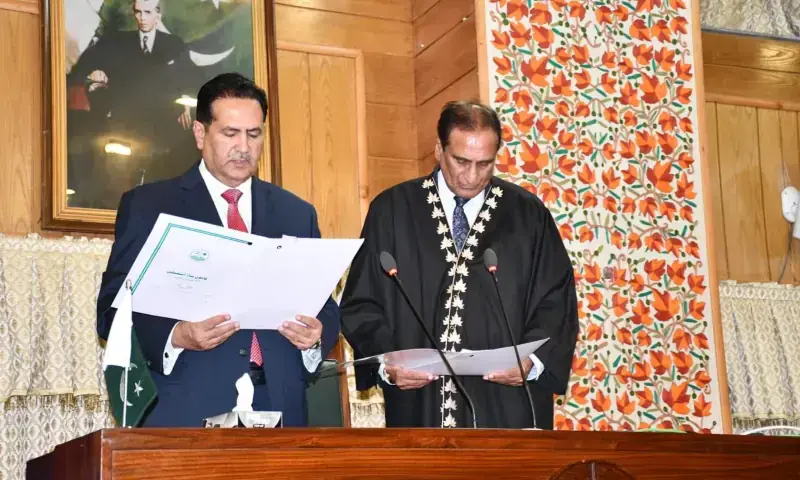
MUZAFFARABAD: Azad Jammu and Kashmir (AJK) Legislative Assembly Speaker Chaudhry Tariq Farooq has called for a broad-based consensus on the future of refugee seats in the assembly, urging political leaders to help resolve the current crisis through dialogue and reforms. Speaking to journalists at the Speaker House on Thursday, Mr Farooq said political leaders had an opportunity to align themselves with national objectives and provide guidance by finding a way forward rather than dwelling on the past. “Learning from mistakes is wisdom. We need to explore new avenues for the future,” he said, adding that he supported reforms in all institutions. AJK could not progress with its large administrative structure and high expenditure, he said, while maintaining that the newly elected government, comprising young people, should be given an opportunity to move in the right direction. Backs institutional reforms, says electricity and flour subsidies will continue He also said subsidies on electricity and flour would not be withdrawn, though relief and concessions should be targeted on the basis of data. Distinguishing between constitutional offices and the executive, he claimed that although power was influential, the assembly speaker was not part of the government, just as the state president was not. “The assembly is not the government; the cabinet and the prime minister constitute the government,” he said. The government had been in office for only a few weeks, and the second phase of cabinet formation was still pending. It would be completed upon the return of PML-N supremo Nawaz Sharif to Pakistan, he said. Mr Farooq said the government and cabinet had not been expanded because elections in seven constituencies of Poonch division were still pending. Without representation from these areas, he added, the government could not be considered complete and fully functional. Poonch situation Mr Farooq said informal negotiations were under way through the AJK president to improve law and order and ease tensions in Poonch. He expressed the hope that backchannel contacts would produce positive results and urged the media to avoid speculation until the talks yielded an outcome. He accused the PPP of attempting to exploit the Poonch situation for political gain during its brief stint in power, adding that the phased elections had been held with the party’s consent. The speaker said the state president and the entire political leadership should come forward to find solutions through dialogue. Political parties and their leaders had a responsibility to play an effective role, he said, adding that the process of rendering them irrelevant and ineffective had begun during the previous assembly. Mr Farooq recalled that he and some other PML-N leaders had called for a fact-finding commission a year ago to examine the circumstances contributing to the current situation, but no political party had supported the proposal. Published in Dawn, October 16th, 2026
- PTA shares tips to improve calls, internet quality
 by none@none.com (The Newspaper's Staff Reporter) on October 16, 2026 at 2:05 am
• Urges users to turn on 4G/LTE, VoLTE settings on their phones • Consumers with older SIM cards told to upgrade for 4G support ISLAMABAD: The Pakistan Telecommunication Authority (PTA) advised mobile phone users on Thursday to adjust their network settings and adopt newer technologies, including Voice over Long-Term Evolution (VoLTE), Wi-Fi Calling, and VoWiFi, to improve their calling and mobile internet experience. Responding to consumer complaints regarding unclear voice quality and connection delays on 4G and LTE calls, the telecom regulator recommended that users verify their handset network settings and activate the 4G/LTE option if it is not already switched on. The authority urged consumers to enable VoLTE, Wi-Fi Calling and VoWiFi options on their phones, noting that the availability and use of these facilities depend on compatibility between the handset and the relevant mobile operator. The guidance is primarily relevant to regions where 4G service is expanding following a recent spectrum auction. According to the regulator, VoLTE enables voice calls over a 4G network, which improves voice quality and speeds up call connections. To benefit from the facility, however, the handset, the SIM card and the mobile operator must all support the technology. For areas where mobile signals are weak, such as inside homes or in basements, the authority said Wi-Fi Calling and VoWiFi could be particularly useful. VoWiFi technology makes Wi-Fi Calling work, allowing users to place calls over a Wi-Fi connection provided their handset and operator support the feature. Users must enable the Wi-Fi Calling option in their phone settings and connect to a Wi-Fi network. Consumers must also ensure that both their phone and SIM support 4G services. Because many older SIM cards do not support 4G or VoLTE, the regulator suggested that users upgrade their SIMs. The 4G/LTE standard is the fourth-generation mobile network technology which offers faster mobile internet speeds than 3G. Published in Dawn, October 16th, 2026