


Top stories - Google News Google News
- Middle East crisis live: Israel launches new attacks on Tehran and Beirut as Iran closes critical Strait of Hormuz - The Guardian
 on March 2, 2026 at 10:07 pm
Middle East crisis live: Israel launches new attacks on Tehran and Beirut as Iran closes critical Strait of Hormuz The GuardianSuspension of Strait of Hormuz Transits Due to Security Closure Hapag-LloydIran war shakes up global shipping routes due to Strait of Hormuz paralysis DawnIran's revolutionary guards tell ships passage through Strait of Hormuz 'not allowed', EU naval mission official says ReutersThe Strait of Hormuz crisis explained: What it means for global shipping CNBC
- England and Pakistan secure semi-final spots in Ismailia - Fédération Internationale de Hockeyon March 2, 2026 at 9:52 pm
England and Pakistan secure semi-final spots in Ismailia Fédération Internationale de HockeyFIH statement ahead of World Cup Qualifiers Fédération Internationale de HockeyPakistan beat Malaysia 5-3 to reach World Cup qualifier semi-finals The Express TribunePakistan edge China 5-4 in thrilling FIH World Cup qualifier opener Daily TimesGreen Shirts face stern Chinese test in World Cup Qualifier opener thenews.pk
- Connor Storrie Addresses Chemistry With ‘Heated Rivalry’ Co-Star Hudson Williams: ‘We Genuinely Love & Understand Each Other’ - Just Jaredon March 2, 2026 at 7:12 pm
Connor Storrie Addresses Chemistry With ‘Heated Rivalry’ Co-Star Hudson Williams: ‘We Genuinely Love & Understand Each Other’ Just JaredConnor Storrie Addresses Chemistry With 'Heated Rivalry' Co-Star Hudson Williams: 'We Genuinely Love & Understand Each Other' IMDbPHOTOS: Connor Storrie goes bareback in scorching spread for his first Vogue cover Queerty'Heated Rivalry' co-star Hudson Williams quite literally crashed onto the set of Studio 8H in a cameo during Connor Storrie's debut. Read more below. facebook.com‘Love is Cool Again’: Connor Storrie Talks Hudson Williams, Heated Rivalry, and Love’s Comeback gayety.com
- PHF unveils reform plan to restore national glory - The Express Tribuneon March 2, 2026 at 7:03 pm
PHF unveils reform plan to restore national glory The Express TribuneCan ongoing structural reforms rescue Pakistan hockey? thenews.pkPakistan Hockey Team Flies For World Cup Qualifiers Under Banned Coach NDTV SportsPHF unveils revolutionary strategic reform agenda to revive national game Associated Press of PakistanPHF brings in three hockey legends for important roles, Samiullah to be new chief selector Moneycontrol.com
- ‘Operation Ghazab Lil-Haq will continue until Taliban stop supporting terrorists’ - RADIO PAKISTANon March 2, 2026 at 6:24 pm
‘Operation Ghazab Lil-Haq will continue until Taliban stop supporting terrorists’ RADIO PAKISTANOp Ghazab Lil Haq to continue until Taliban halt support for terrorists: state media The Express TribunePakistan Intensifies Anti-Terror Operations Amid Iran Policy Pakistan TodayOperation Ghazab Lil Haq: 435 Afghan Combatants Killed, 188 Vehicles Destroyed Pakistan TodayPakistan vows no let-up in Afghanistan operation Aaj English TV
Al Jazeera – Breaking News, World News and Video from Al Jazeera Breaking News, World News and Video from Al Jazeera
- What dangers does the Iran war pose for Israel?on March 2, 2026 at 9:38 pm
Both the collapse and survival of Iran's Islamic Republic pose risks.
- Rubio suggests US strikes on Iran were influenced by Israeli planson March 2, 2026 at 9:30 pm
Secretary of state says he hopes Iranian people would overthrow regime as US military says six service members killed.
- Spain refuses to let US use bases for Iran attackson March 2, 2026 at 8:31 pm
Spanish Prime Minister Pedro Sanchez has condemned US and Israeli strikes on Iran.
- US-Israeli strikes hit housing, hospitals, and more in Tehranon March 2, 2026 at 8:22 pm
The damage from US-Israeli strikes on Tehran is growing, with hits on housing, hospitals, police stations, and more.
- Anti-war candidates pose early test for US Democrats after attacks on Iranon March 2, 2026 at 8:02 pm
Nida Alla, Kat Abughazaleh among those seeking new aims for Dems in midterms, including abolishing ICE and ending wars.
BBC News BBC News - World
- 'Everything has changed': Missile attacks shatter Dubai's safe haven image
 on March 2, 2026 at 10:06 pm
Dubai’s reputation as a prosperous destination for expats and influencers has changed for some following Iranian strikes.
- Oil and gas prices jump as conflict escalates
 on March 2, 2026 at 9:23 pm
Experts have warned that a prolonged conflict could push global energy prices even higher.
- Texas authorities identify Austin bar shooting victims
 on March 2, 2026 at 9:21 pm
Two victims and the suspected gunman were killed, and 14 more injured in the Sunday shooting that the FBI says could have terrorism links.
- Watch: How the US-Israel war with Iran is jeopardising shipping
 on March 2, 2026 at 9:21 pm
Ben Chu has been looking at what’s happened to marine traffic in the Strait of Hormuz, a key trade passage.
- India and Canada reset ties with 'landmark' nuclear energy deal
 on March 2, 2026 at 8:18 pm
A host of deals, including one to supply India with uranium, is unveiled as Mark Carney meets Narendra Modi in Delhi.
Dawn - Home Dawn
- Senior security official dismisses speculation that Pakistan could be next target after US-Israeli strikes on Iran
 by none@none.com (Baqir Sajjad Syed) on March 2, 2026 at 7:46 pm
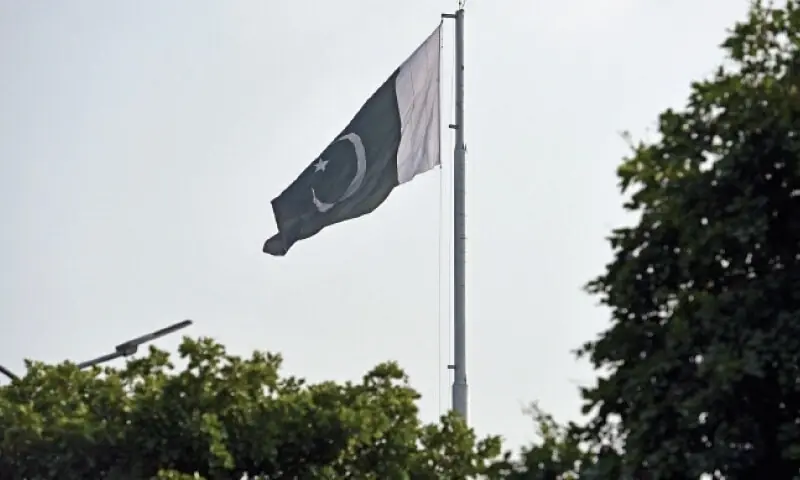
ISLAMABAD: A senior security official on Monday dismissed speculation that after Iran, Pakistan could be the next target of US-Israeli military action, saying such perceptions were “devoid of facts” and were being spread by “agents of chaos”. According to a brief shared with Dawn, the official said Pakistan was unlike Iran, that it was fully integrated with the world and fully capable of defending itself. He said that those spreading “alarmist narratives” were pursuing “nefarious and vested interests.” His remarks came amid an escalating war in the Middle East in which Israel and the United States, for the second time in eight months, launched coordinated strikes against Iran. Tehran retaliated by targeting Israeli territory and American military facilities in neighbouring countries, raising fears of a wider regional conflagration. Following the US-Israeli airstrikes, there has been speculation and concerns that Pakistan could face similar aggression. Some analyses from Western think tanks had also speculated about potential spillover effects on nuclear-armed states in the region. The security official, however, rejected any comparison. “The misperception of Pakistan likely to be the next target is devoid of facts and is highly misplaced,” he said, according to the brief. “Pakistan can never be equated with Iran as both countries are different militarily and in terms of foreign policy, external engagement and internal dynamics,” he added. The official said Pakistan pursued “a robust foreign policy” and valued its relations with multiple global stakeholders. “We believe in engagement for the sake of stability and prosperity of the people of Pakistan,” he added. According to the official, Pakistan’s relations with the rest of the world were based on “mutual respect and trust,” reflecting what is often described as a hedging strategy that includes balancing ties with Washington, Tehran and Riyadh while avoiding entanglement in bloc politics. Unlike Iran’s adversarial posture towards the West, Pakistan maintains defence cooperation with Saudi Arabia, economic engagement with the United States and a working relationship with Iran, with whom it also shares a long border and limited trade links. Officials say this multi-vector diplomacy is designed to secure economic stability, including energy security, while insulating the country from regional shocks. ‘Pakistan fully capable of defending its sovereignty’ On the military front, the official underscored deterrence. “Pakistan is fully capable of defending its sovereignty and territorial integrity and the same has been displayed during recent events of Marka-i-Haq and our protracted fight against the scourge of terrorism,” he said. “Marka-e-Haq” refers to Pakistan’s May 2025 military conflict with India, including the 96-hour Operation Bunyan-un-Marsoos, in which 26 targets were struck. The official said, “Pakistan’s armed forces, with the support of the brave and resilient nation, will thwart all nefarious designs of our enemies. Anyone having any doubt is most welcome to get his notions settled.” On regional ties, the official said, “Pakistan greatly values its decade-old brotherly and strategic relations with Saudi Arabia,” underscoring Islamabad’s longstanding defence and economic partnership with Riyadh. Speaking about the International Stabilisation Force (ISF), which is being set up by US President Donald Trump’s Board of Peace for post-ceasefire arrangements in Gaza, the official said deliberations were ongoing. “Details regarding ISF are yet to be worked out. The decision of Pakistan’s participation will be taken by government of Pakistan after due diligence,” he said, indicating that no commitment had yet been made and that the matter remained under review. The official also addressed countrywide protests in Pakistan following the assassination of Iran’s Supreme Leader Ayatollah Ali Khamenei. Demonstrations were held in several cities, and at least 20 people lost their lives in related unrest. “Pakistan has expressed concerns over unfortunate events in Iran,” the official said. “While peaceful protest is the right of people, violence in the garb of protests cannot be condoned,” he added. He warned that “any attempt to create chaos in the country will be dealt as per the law and few miscreants cannot be permitted to bring a bad name to peaceful protesters.” ‘In no hurry to end Operation Ghazab lil-Haq’ The security official also said that Pakistan was in no hurry to wind up Operation Ghazab lil-Haq and would continue cross-border action against terrorist sanctuaries inside Afghanistan until Kabul offered verifiable guarantees against terrorism facilitation. “Pakistan is in no hurry to end Operation Ghazab lil-Haq. It’s time for terrorism supporters and abettors to bleed and suffer,” the official said according to the brief. The operation was launched on Feb 26 after Afghan Taliban fighters attacked Pakistani border posts along the border, following Pakistani strikes four days earlier on terrorist hideouts in Afghanistan. Islamabad says the Feb 22 strikes targeted infrastructure used by the banned Tehreek-i-Taliban Pakistan (TTP), which the state refers to as Fitna-al-Khawarij, and other groups that are operating from Afghan soil. Setting out Islamabad’s position, the official said: “Operations in Afghanistan will end when Afghanistan’s Taliban regime provides verifiable assurance of compliance with Pakistan’s demand of quitting the facilitation of Fitna-al-Khawarij and Fitna-al-Hindustan. We are in no hurry.” The state has designated Balochistan-based groups as Fitna-al-Hindustan to highlight India’s alleged role in terrorism and destabilisation across Pakistan. The security official further said that “the duration of Pakistan operations depends on actions on [the] ground by the Afghan Taliban regime,” indicating there was no fixed timeline and that de-escalation would be conditional. The official said the Afghan Taliban must make a strategic choice. “Afghan Taliban have to choose between Pakistan and terrorist groups operating from its soil.” He described the Afghan Taliban as a “proxy master harbouring multiple terrorist groups to disturb regional peace,” saying that they were “flourishing on war economy in the garb of their perverted religious ideology” and that “their leaders’ only religion is money and nothing else.” Islamabad has repeatedly accused Kabul of providing space to the TTP since the Taliban takeover of Afghanistan in 2021. UN monitoring reports over the past two years have noted the TTP’s presence in eastern Afghanistan, though the Taliban deny offering support. Defending the scope and conduct of the current campaign, the official said the targets were specific and intelligence-driven. “Pakistan is targeting sanctuaries of terrorists and their facilitators who are harbouring them. These are legitimate self-defence targets of the war of terror imposed upon Pakistani citizens, mosques and children. “Pakistan is not resorting to attacking random targets in Afghanistan, rather the infrastructure supportive of terrorist groups are specific targets,” he said. The official said that during the ongoing Operation Ghazab lil-Haq, “we have destroyed more than 180 posts and captured more than 30 … All these are those posts from where terrorists were being facilitated as launch pads.” The official also accused Kabul and New Delhi of orchestrating a disinformation campaign. “The Afghan Taliban regime and their Indian masters are consistently resorting to concocted propaganda and false information through their official accounts. Please fact-check everything. Afghan Taliban official accounts have no credibility.” He also clarified that Pakistan’s actions were not directed at Afghan civilians. “We have no issue with the people of Afghanistan; our operations are focused on those perverted kharjis and their supporters who perpetrate and support acts of terrorism inside Pakistan.” “Pakistan’s operations against terrorists in Afghanistan have received positive response from oppressed Afghan communities and minorities.” Rejecting suggestions that Islamabad was pursuing regime change in Kabul, the official added: “Pakistan has nothing to do with regime change in Afghanistan, it is the prerogative of the Afghan people. They are happy that someone has stood up to these cruel warlords.” ‘No interest in politics’ He also linked the army’s sustained involvement in internal security to domestic governance shortcomings. “Pakistan Army’s involvement in internal security is due to governance gaps. Our involvement is because of the non-implementation of the National Action Plan (NAP) in totality and the politicisation of institutions that are primarily responsible for internal security,” he said. “That’s why we ask all political parties and governments for better governance and NAP implementation. We have no interest in politics and other matters.”
- Talks between Pakistan, IMF mission go virtual amid regional volatility
 by none@none.com (Khaleeq Kiani) on March 2, 2026 at 5:11 pm
ISLAMABAD: The ongoing talks between an International Monetary Fund (IMF) staff mission and authorities in Islamabad had to be converted to virtual mode on Monday due to the regional situation following the attack on Iran by the United States and Israel. The IMF mission, led by Iva Petrova, had to immediately relocate to Istanbul following an advisory issued by the money lending agency’s headquarters, disrupting a series of sectoral meetings planned for the day. The remaining schedule of meetings, however, will remain intact and will progress through video link between Islamabad and Istanbul. “An IMF mission led by Iva Petrova has started discussions with the authorities in Karachi and Islamabad on the third review of Pakistan’s Extended Fund Facility (EFF) arrangement and the second review of the Resilience and Sustainability Facility (RSF). Discussions will continue to be held virtually,” the Fund said in a statement. Earlier in the day, the two sides had a kick-off meeting presided over by Finance Minister Muhammad Aurangzeb. The two sides broadly touched upon the emerging regional security situation but were equally uncertain about how the crisis would play out and for how long. The two sides said they would closely monitor the evolving situation and discuss contingency measures as the engagements progressed. The Fund’s mission began discussions with the State Bank of Pakistan and the business community in Karachi on February 25. The formal kickoff meeting took place on Monday, which will be followed by further technical engagements with relevant ministries and entities until this weekend. Meetings will then progress to policy-level talks early next week, with a final wrap-up meeting with the finance minister planned for March 11. The discussions on Monday revolved around third review of the $7bn Extended Financing Facility (EFF) and 2nd review of $1.1bn Resilience & Sustainability Facility (RSF). According to a handout from the finance ministry, during the meeting with the IMF mission, Finance Minister Muhammad Aurangzeb underscored that since the successful completion of the previous review, Pakistan had continued to “consolidate the hard-earned gains in macroeconomic stability” achieved under EFF and RSF programmes. “He emphasised the government’s firm resolve to maintain fiscal discipline and safeguard macroeconomic stability, terming these achievements as the result of sustained and difficult reforms,” the statement said. It further said that the finance minister highlighted that structural reforms, particularly in taxation and the energy sector, remained central to the government’s reform agenda. He noted that comprehensive transformation efforts in tax administration, encompassing improvements in people, processes and technology, were underway with “strong leadership at the highest level”. He also told the IMF mission that steps had been taken to fully operationalise the Tax Policy Office to ensure that future taxation policies were guided by economic principles aimed at supporting sustainable growth. On the privatisation and state-owned enterprise reform agenda, Aurangzeb reaffirmed the government’s commitment to advancing key transactions and restructuring initiatives during the year. He observed that recent developments had demonstrated “growing investor confidence and a renewed appetite among domestic investors, reflecting trust in the economy’s direction and reform trajectory”, the statement said. The minister added that the privatisation and restructuring process would continue in a transparent and orderly manner. He also outlined progress on rightsizing the federal government, including the merger of ministries and closure of certain entities, as part of broader public sector reforms aimed at improving efficiency and governance, the statement said. He reiterated the government’s commitment to an export-led growth strategy, supported by trade facilitation measures and tariff rationalisation to enhance competitiveness and reduce import dependency over time. Aurangzeb further apprised the mission of the government’s response to flood-related challenges during the fiscal year, noting that the availability of fiscal buffers enabled timely rescue and relief efforts. He observed that maintaining macroeconomic stability had strengthened the country’s resilience to external and climate-related shocks, the handout said. Regarding the country’s economic performance, the minister said that recent indicators pointed toward a gradual recovery, with positive trends in growth and key sectors. “However, he acknowledged emerging global headwinds, including evolving geopolitical developments and volatility in international energy markets, which pose potential risks. He informed the IMF mission that a high-level committee has been constituted to closely monitor the evolving situation and ensure coordinated policy responses,” the statement said. He also emphasised that while stabilisation efforts were necessary to restore macroeconomic balance, the government remained “mindful of the social impact” and would continue to pursue policies aimed at enhancing social spending to protect the vulnerable population. Meanwhile, Petrova thanked the minister for the comprehensive briefing and shared insights, including from the mission’s discussions with authorities in Karachi on the ongoing reviews under the EFF and RSF. Both sides agreed to continue further discussions virtually in the coming days, the statement concluded. Significance of reviews talks It is worth mentioning that the finance minister said last week that Pakistan was well-positioned for a successful review of its loan programme. The review talks, ending March 11, are of greater significance as both sides have to review the performance of the progammes for the half-year ending on December 31, 2025 as well as forward-looking preparations, including budget proposals based on performance this year, while also setting broad contours of the upcoming budget. This would involve provincial reviews for now and the future, particularly those relating to provincial finances, including agriculture income tax and governance-related challenges and an action plan to address those weaknesses resulting in losses worth trillions of rupees. In this regard, procurement and accountability agencies would be under added scrutiny, including their independence, institutional capacities, processes and performances. The programme’s performance as of the end of December 2025 — the period under review — has mostly been up to the mark, albeit with a substantial revenue shortfall, which authorities believe could be reduced following a recent super tax decision by the Federal Constitutional Court in the government’s favour. However, the overall tax-to-GDP ratio remains within limits. The two sides will also review all macroeconomic indicators for the third quarter still in progress. The power sector would also remain under added scrutiny given volatile policy making in the recent months, including those relating to the industrial sector, residential fixed charges and so on, although circular debt numbers are within the target range. On the positive side, Pakistan has met almost all quantitative performance criteria for the period under review. However, it is lagging behind in indicative targets and structural benchmarks, which could affect future programme implementation. Given the biannual reviews of the $7bn EFF and the $1.1bn RSF, the two sides will have to agree on past performance as well as forward-looking implementation plans. Upon the successful completion of the review, Pakistan will be eligible for the disbursement of about $1bn under the EFF and another $200m under the RSF by the end of April. On the technical side, Pakistan will likely meet almost all seven quantitative performance indicators. Net international reserves were likely to remain slightly lower than the $7bn benchmark for September 2025 and below $6bn for December 2025 against the $6.5 bn benchmark. The central bank’s net domestic assets are estimated at around Rs12.5-13.5 trillion versus the ceiling target of Rs14.9-15.1tr for Sep and Dec 2025.
- PCB fines Green Shirts Rs5 million each for lacklustre T20 World Cup campaign: report
 by none@none.com (News Desk) on March 2, 2026 at 5:03 pm
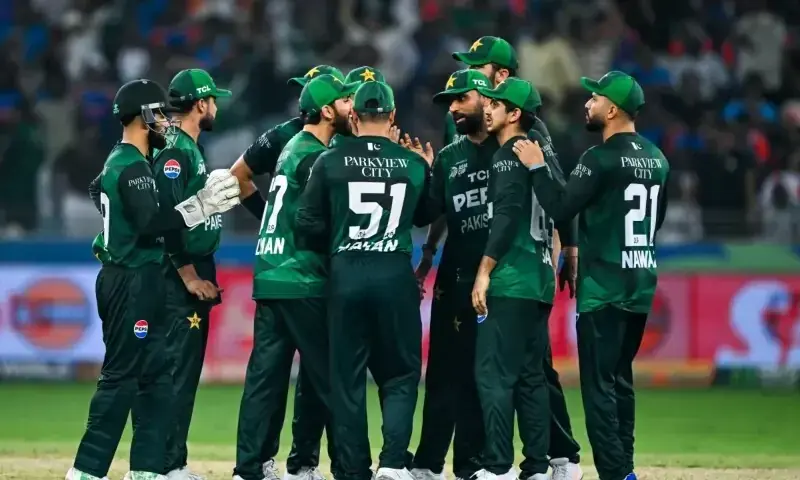
The Pakistan Cricket Board (PCB) has imposed each member of the squad for the T20 World Cup Rs5 million following their “underwhelming” campaign, ESPNcricinfo reported on Monday. According to the report, the fines were not for disciplinary reasons, but specifically for what the cricket board deemed “poor performance” at the event. “They were imposed immediately following Pakistan’s match against India in the group stages, where a meek showing resulted in a 61-run defeat,” it stated. The report further said that players were told that the fines might have waived off, if Pakistan had reached the tournament’s semi-finals. “The PCB has come down hard on players in the past, though sanctions have generally been framed as disciplinary,” the report said. “ESPNcricinfo has learned there were no disciplinary issues within the team throughout the tournament, and the fines have been levied specifically for the quality of their on-field performances,” it added. “That makes the sanctions handed out by the PCB particularly rare, and potentially unprecedented,” it added. Pakistan were knocked out of the tournament on Saturday despite a narrow five-run win over Sri Lanka in the Super Eight clash in Kandy. Prior to the game, the Green Shirts had also failed to defeat any major team in the tournament. Following the team’s exit, skipper Salman Agha had admitted that the squad had “underperformed” but had held back from making an “emotional” decision on his future as captain. “We have underperformed in the whole tournament. We are out of the semis due to our failure in decision-making in pressure situations,” he told reporters.
- France to increase nuclear warheads, work with allies to protect Europe
 by none@none.com (AFP) on March 2, 2026 at 4:56 pm
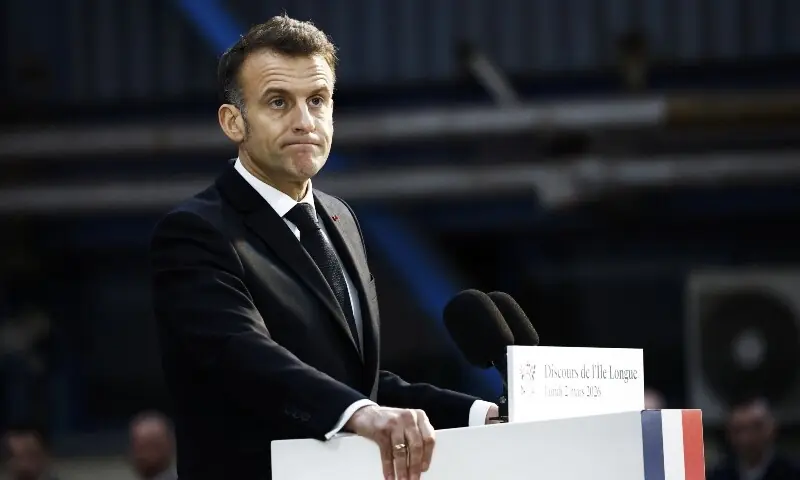
President Emmanuel Macron said on Monday that France would increase the number of its nuclear warheads and cooperate with eight European countries to help protect the continent as the clock ticks on his presidency. His speech at France’s Ile Longue nuclear submarine base came after US and Israeli attacks against Iran in a campaign that risks destabilising the Middle East. Macron updated France’s nuclear doctrine as Russia’s war against Ukraine grinds into a fifth year and Nato allies worry about Washington’s wavering commitment to Europe. “We must strengthen our nuclear deterrent in the face of multiple threats, and we must consider our deterrence strategy deep within the European continent, with full respect for our sovereignty,” Macron said. He announced “the gradual implementation of what I would call advanced deterrence”. Macron announced a series of concrete measures in a bid to bolster Europe’s security as France’s allies are concerned that a possible win by the eurosceptic far-right National Rally party of Marine Le Pen in next year’s presidential election could undermine cooperation in Europe. “An upgrade of our arsenal is essential,” Macron said. “That’s why I ordered an increase in the number of nuclear warheads in our arsenal.” Macron added, however, France would no longer be disclosing details on its nuclear stockpile. France maintains the world’s fourth-largest nuclear arsenal, estimated at around 290 warheads. Britain, which is no longer a member of the European Union, is the only other European nuclear power. By contrast, the United States and Russia, the world’s two main atomic powers, have thousands of nuclear warheads each. Eight countries Since Macron’s last speech on nuclear deterrence in 2020, Paris has been in talks with countries including Germany and Poland over how France could use its atomic arsenal to bolster security. On Monday, Macron said eight European countries had agreed to participate in the “advanced” nuclear deterrence scheme proposed by France, including Germany, Britain and Poland. The countries — also including the Netherlands, Belgium, Greece, Sweden and Denmark — will be able to host French “strategic air forces”, which will be able to “spread out across the European continent” to “complicate the calculations of our adversaries,” he said. The scheme could also involve “the conventional participation of allied forces in our nuclear activities,” such as recent military exercises in which British forces have been involved, Macron added. Macron also warned that a widening war between the United States, Israel, and Iran risked spilling over to Europe’s borders. The conflict, which began on Saturday, “brings and will continue to bring instability and a possible conflagration to our borders, with Iran’s nuclear and ballistic capabilities still intact”, he said. Heloise Fayet of the French Institute of International Relations and Claudia Major of the German Marshall Fund of the United States warned that a common European deterrent would require a level of political integration that seems unrealistic in the near future. Writing in Le Monde, they said Europe should develop a nuclear strategy “that is truly European and not a copy of the American model”. “The first step is to stop delegating thinking on nuclear strategy to the United States,” said Fayet and Major. “The era of strategic complacency is over.” The Ile Longue base is home to France’s four ballistic missile submarines — Le Triomphant, Le Temeraire, Le Vigilant and Le Terrible. At least one is permanently at sea to ensure nuclear deterrence.
- Govt to translate impact of rising global oil prices to consumers under existing fortnightly mechanism
 by none@none.com (Khaleeq Kiani) on March 2, 2026 at 4:24 pm
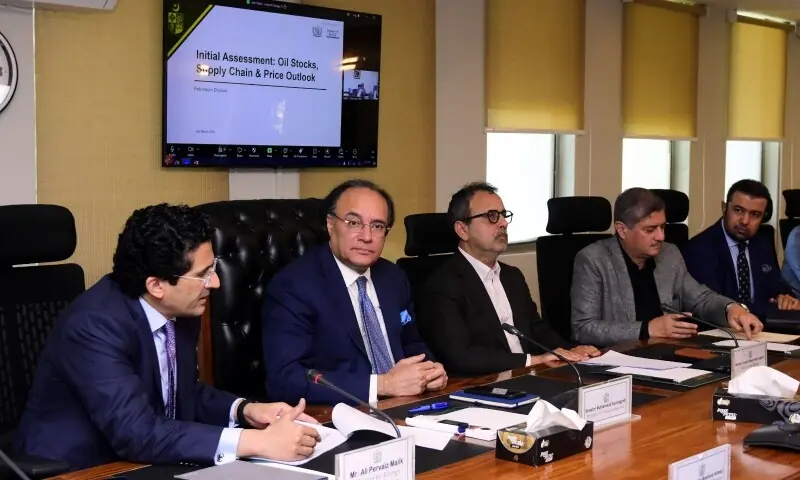
ISLAMABAD: Amid disruption to LNG imports from Qatar, the government on Monday decided to keep translating the impact of rising global oil prices to consumers under the existing fortnightly pass-through mechanism to avoid a fiscal bulge amid close monitoring of supplies. A meeting of the newly created 18-member cabinet committee, constituted by Prime Minister Shehbaz Sharif to monitor petroleum prices in the wake of the emerging situation in the region, was told that petrol and diesel stocks in the country were sufficient for almost a 30-day cover but Qatar Gas had closed its liquefied natural gas (LNG) facility after it came under Iranian attack. Official communication from Doha about the latest situation was, however, still awaited. LNG supplies would nevertheless not be available beyond a few cargoes that had already crossed the Strait of Hormuz towards Karachi. The 18-member cabinet body constituted by the prime minister included the ministers for petroleum and power; the State Bank of Pakistan governor; the secretaries of petroleum, power and finance; the chairman of the Oil and Gas Regulatory Authority; the managing director of Pakistan Refinery Limited; and representatives of Inter-Services Intelligence and the Intelligence Bureau, among others. The meeting focused on the impact of the closure of the Strait of Hormuz and authorities concerned were directed to explore alternate supply routes. It was reported that while there was no emergent situation, Saudi supplies of finished products could be routed through the Red Sea, while UAE imports through Fujairah were beyond the troubled route. According to an official handout, the committee also undertook a comprehensive stocktaking exercise and deliberated on all matters within its mandate. Members reviewed trends in forward and futures prices of petroleum products, assessed the resilience of regional and international supply chains amid the evolving geopolitical environment, examined potential short and medium-term foreign exchange implications of price volatility, and evaluated measures to prevent supply disruptions while ensuring uninterrupted domestic availability of petroleum products. The possible fiscal impact of a prolonged conflict was also considered, but there was a lack of visibility due to uncertainties. A detailed assessment of global oil market conditions was presented, including movements in international benchmarks, freight and insurance costs, shipping route dynamics, and alternative sourcing options. Various supply and pricing scenarios were evaluated to ensure preparedness under different contingencies. It was, however, noted that these costs would become clear once the London market started business and would show the latest trends which could be discussed later this week as the committee would be meeting regularly. The committee was informed that national stocks of petroleum products were presently at comfortable levels. According to the handout, the finance minister was quoted as saying that there was no immediate supply stress and that maintaining market confidence and orderly conditions remained essential. While acknowledging that the international environment was fluid and evolving, he noted that Pakistan’s energy supply chain remained stable and fully functional. The committee also noted that closure of the Strait of Hormuz and tensions around the Bab-el-Mandeb Strait were major challenges for global energy security. “If the situation persists, then it may have implications for Pakistan’s energy supply chain,” the handout said. It further quoted Aurangzeb as saying that the committee would operate as a strategic governance forum to continuously monitor developments and undertake structured scenario planning. “He underscored that ensuring the availability of energy supplies across the country was the government’s primary objective and would remain the central driver of all decisions,” the statement said. He directed all relevant entities to intensify coordination, validate physical stock positions, closely track shipments and storage, and remain fully prepared to respond to emerging developments. He further emphasised that any decisions taken by the committee would be implemented with clarity and transparency. “Pricing implications arising from international market movements, where unavoidable, will be addressed through established mechanisms in a predictable and orderly manner to avoid distortions or abrupt adjustments,” the statement said. The meeting also reviewed LNG and liquefied petroleum gas (LPG) supply positions, shipment schedules, terminal operations, and line-pack considerations. According to the statement, the relevant ministries were tasked with refining comparative scenario assessments, including economic and fiscal trade-offs associated with alternative fuel utilisation and demand management options. To ensure continuous oversight and institutional readiness, it was decided that the committee would convene daily, with structured data consolidation followed by formal review, it added. “This mechanism will enable real-time monitoring of international price movements, domestic stock levels, foreign exchange exposure, and supply chain developments,” the statement said. Concluding the meeting, Aurangzeb reaffirmed that the government was closely monitoring the situation at the highest level and that proactive measures were firmly in place. He assured the public and market participants that there was no cause for concern. “Energy supplies remain stable, governance mechanisms are fully operational, and comprehensive contingency planning is actively underway to safeguard national interests,” he was quoted as saying. The cabinet committee is required to determine the foreign exchange implications of oil price volatility for the short and medium term and suggest measures to ensure uninterrupted supplies of oil products and markets stay adequately supplied. It is also tasked with carrying out a detailed analysis of the fiscal impact in the event of a prolonged conflict and reviewing the broader effects of the war on Pakistan’s economy. It will submit its regular reports to the prime minister.